


Book Review: “Islam and the Economic Challenge” by Dr. Mohamed Omar
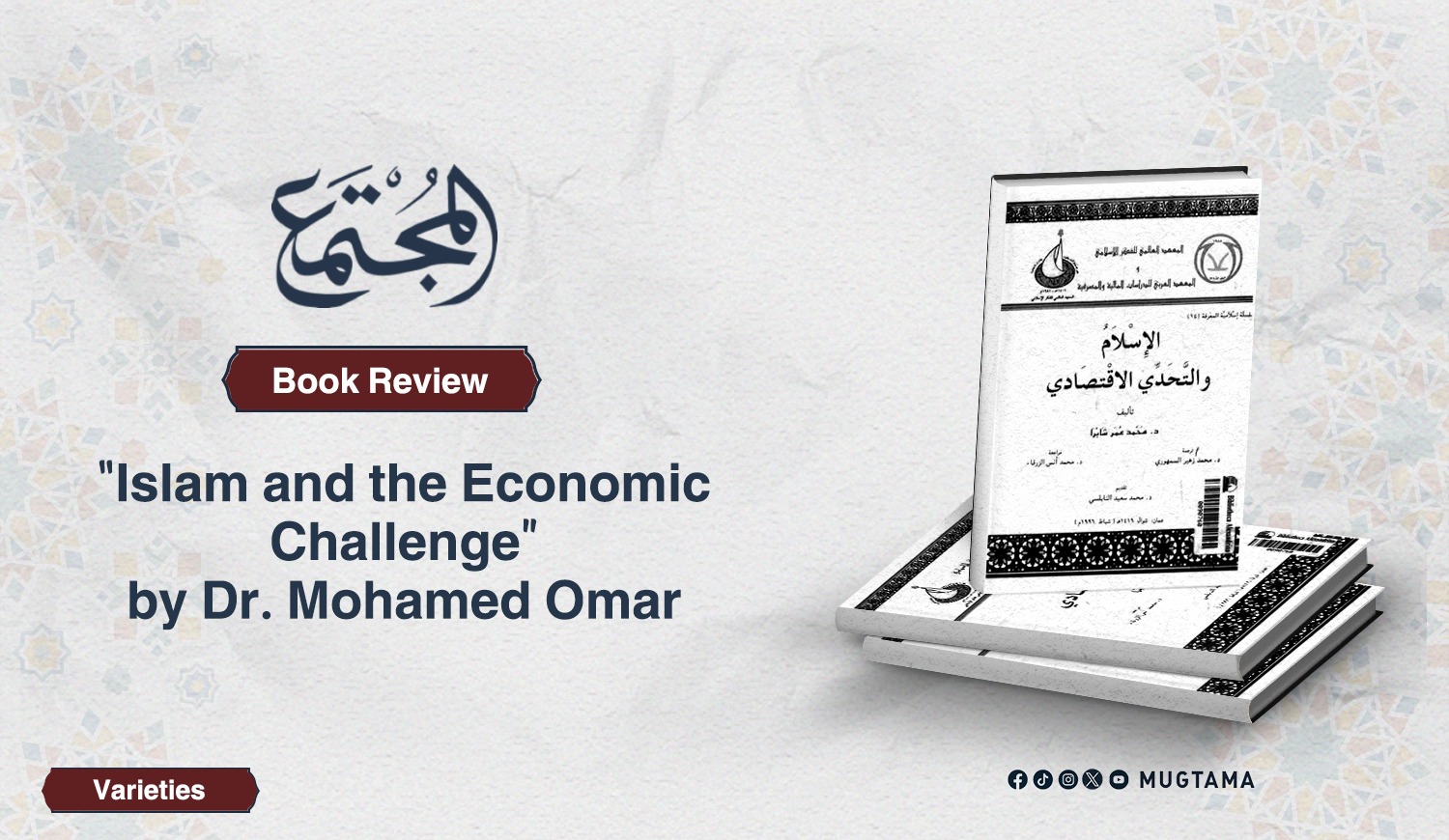
The book Islam
and the Economic Challenge by Dr. Mohamed Omar offers a profound critical
analysis of contemporary economic systems—both capitalism and
socialism—highlighting their failure to achieve a balance between material
efficiency and social justice.
It presents an
alternative Islamic vision based on the concept of falah (success and prosperity), linking economic
achievement to spiritual values, and emphasizes that overcoming global crises
requires an ethical framework that guides human behavior toward optimal
utilization of limited resources in a way that serves the collective good.
The
Crisis of Contemporary Economic Systems
The author
begins by examining the shortcomings of capitalism, which prioritizes
individual gain while neglecting social dimensions, and socialism, which
restricts freedoms and fails to stimulate creativity. He argues that both
systems have failed to address scarcity because they ignore the need for an
internal moral compass that regulates consumption and curbs greed. This has led
to a widening gap between the rich and the poor and the depletion of resources
on luxury goods that do not contribute to genuine development.
The
Islamic Approach and Achieving Balance
The book
outlines the unique characteristics of the Islamic economic system, which
combines market freedom with ethical oversight. Private ownership is treated as
a trust and a responsibility before Allah.
The author
explains how Islam provides a mechanism of purification through a system
of values that prevents extravagance and waste, directing investments toward
sectors that meet the essential needs of society. This ensures efficient use of
resources without compromising the rights of future generations.
Distributive
Justice and Human Dignity
Dr. Omar
emphasizes that the ultimate goal of economic activity in Islam is
comprehensive justice. Achieving this requires restructuring financial and
monetary institutions to serve real production. Human dignity, he argues, is
realized not merely by guaranteeing a minimum standard of living, but by
enabling economic empowerment through equitable distribution of wealth and
employment opportunities. Institutional mechanisms like zakat and endowments
(awqaf) play a key role, functioning as organized instruments rather than mere
acts of individual charity.
Economic
Reform Strategy
The book
concludes with a roadmap for reform, beginning with individual change and
consumption patterns, followed by reforming the banking system, eliminating
interest and harmful speculation, and encouraging Islamic countries to adopt
self-reliant strategies and develop technologies suited to their circumstances.
The author stresses the role of the state in oversight, ensuring market
stability, and protecting vulnerable groups, ultimately building a
compassionate and productive society.
Conclusion
The book stands
as an intellectual reference demonstrating that Islam provides practical
solutions to modern economic challenges, provided its principles are translated
into effective policies and institutions capable of achieving both material
development and spiritual advancement simultaneously.
Read Also:
-
Islamic Economic Development (1)
-
How the Quran Predicted Global Economic Crises?
-
Islamic Values Drives Economic Development
-
3 Principles of Islamic Economics
-------------------------------------------------------------
