


Book Review: “Relax Your Mind” by Dr. Abdullah Al-Mulhim
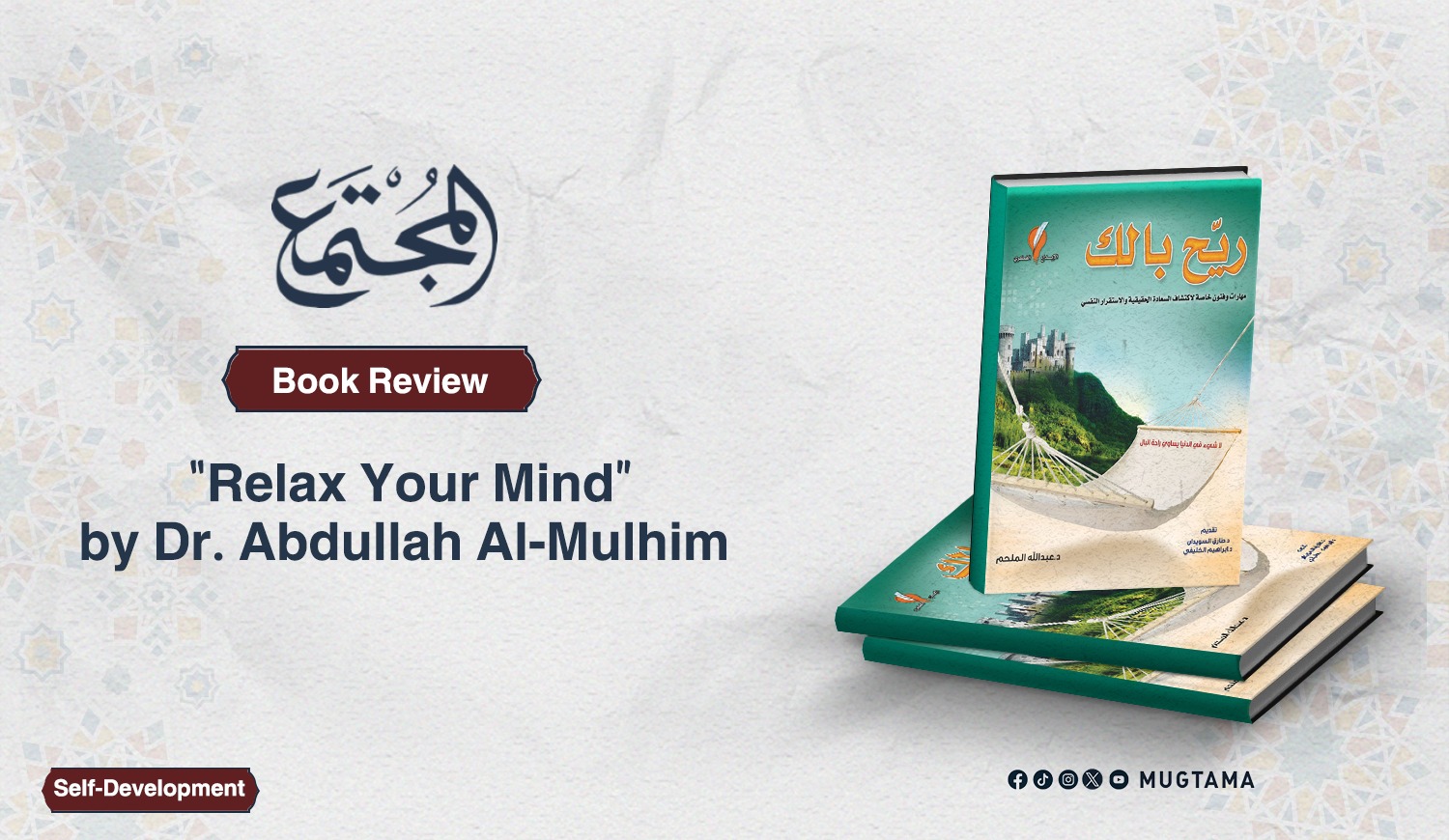
The book “Relax
Your Mind” presents a collection of skills and techniques aimed at
discovering true happiness and psychological stability. It offers an effective
“prescription” for achieving peace of mind and attaining feelings of
tranquility and serenity, allowing the body, mind, and soul to experience
happiness in this world.
In the first
chapter, the author, Dr. Abdullah Al-Mulhim, explains that human beings need
peace of mind for many purposes, including performing acts of worship, facing
life’s challenges, accomplishing their dreams, and achieving their ambitions.
In his book,
published in 2009, Al-Mulhim lays out the fundamental principles for changing
one’s way of thinking, describing it as a powerful method that can transform a
person’s life for better or worse. He points out that most people who feel
unhappy do so because of their patterns of thinking.
The Path
to Inner Tranquility
The author
discusses the concept of the “tranquil soul,” stating that in order to feel
happiness and contentment, one must maintain a constant connection with their
inner self until it reaches a state of calm. He emphasizes that the primary
path to peace of mind lies in returning to faith, knowing Allah, and fulfilling
His rights. He cites prayer as an example, explaining how it generates
spiritual vitality and can even contribute to the rapid healing of certain
illnesses.
Al-Mulhim then
explores the concept of “great minds,” describing how such individuals focus on
developing themselves and their skills through various methods. They are able
to transform anxiety into opportunity and worry into achievement, affirming
that intellectual growth leads to peace of mind.
Regarding the
“pure heart,” the author believes that one of the most important
means to achieving peace of mind is to cleanse the heart from all impurities,
such as hatred, resentment, and envy. He explains that forgiveness liberates a
person from the prisons of fear and extinguishes internal conflicts, making it
one of the most effective remedies for the soul.
Balance
Between Body, Mind, and Soul
The book also
addresses the “well-rested body,” discussing techniques for physical care and
ways to achieve a healthy state through scientific methods that contribute to
overall well-being and peace of mind. It highlights issues such as obesity and
other conditions that lead to stress and discomfort, while emphasizing the
importance of maintaining inner balance between the body, mind, emotions, and
soul. True happiness, the author argues, requires this balance.
Al-Mulhim
stresses the importance of building a “self-confidence bank,” suggesting that
each person has a reserve of confidence that can increase or decrease depending
on their actions. He asks what kinds of “deposits” can raise this balance and
answers that one of the greatest is developing a positive habit in one’s life.
Relationships
and Behavioral Wisdom
The author, a
specialist in psychiatry, also sheds light on behavioral aspects in dealing
with others through what he calls the “golden egg method.” This involves
balancing the giving of compassion, kindness, and love to one’s spouse,
children, and employees, which in turn yields positive outcomes—the “golden
eggs.”
Among the
behavioral approaches to achieving peace of mind, he discusses problem-solving
techniques. He provides the example of a man who only washes his car and house
when it rains, only for them to become dirty again because of the rain. The man
remains trapped in this cycle, preoccupied and frustrated, failing to realize
that he is trying to solve his problem under unsuitable conditions. The author
advises not to attempt solving problems when one is tired or distressed, but
rather to wait until reaching a state of mental ease.
The book also
emphasizes the importance of one-on-one meetings with employees, friends, or
family members, as these interactions enhance influence and contribute to peace
of mind. It highlights the need to release built-up anxiety and fear, opening
the door to new opportunities for change and happiness.
Finally, the
concept of a “relationship bank” is introduced. Psychologists compare
relationships to a bank account: you can make deposits that strengthen the
relationship or withdrawals that weaken it. The author notes that for
teenagers, the most valuable deposits are praise and appreciation, as they are
in the process of forming their identity.
The book
identifies three key “deposits” that can strengthen any relationship: attentive
listening, sincerity, and apology. By practicing these three, one can reap the
reward of peace of mind.
A
Peaceful Life
Overall, the
book is rich and valuable, drawing on principles of cognitive behavioral
therapy and offering practical steps toward achieving peace of mind and
intellectual and emotional well-being, supported by personal development
strategies and self-management skills.
Read Also:
-
Mental Health and Soundness of the Mind
-
Contentment: The Secret to a Tranquil Heart
-------------------------------------------------------------
