


Slave Trade of Western Nations
After the
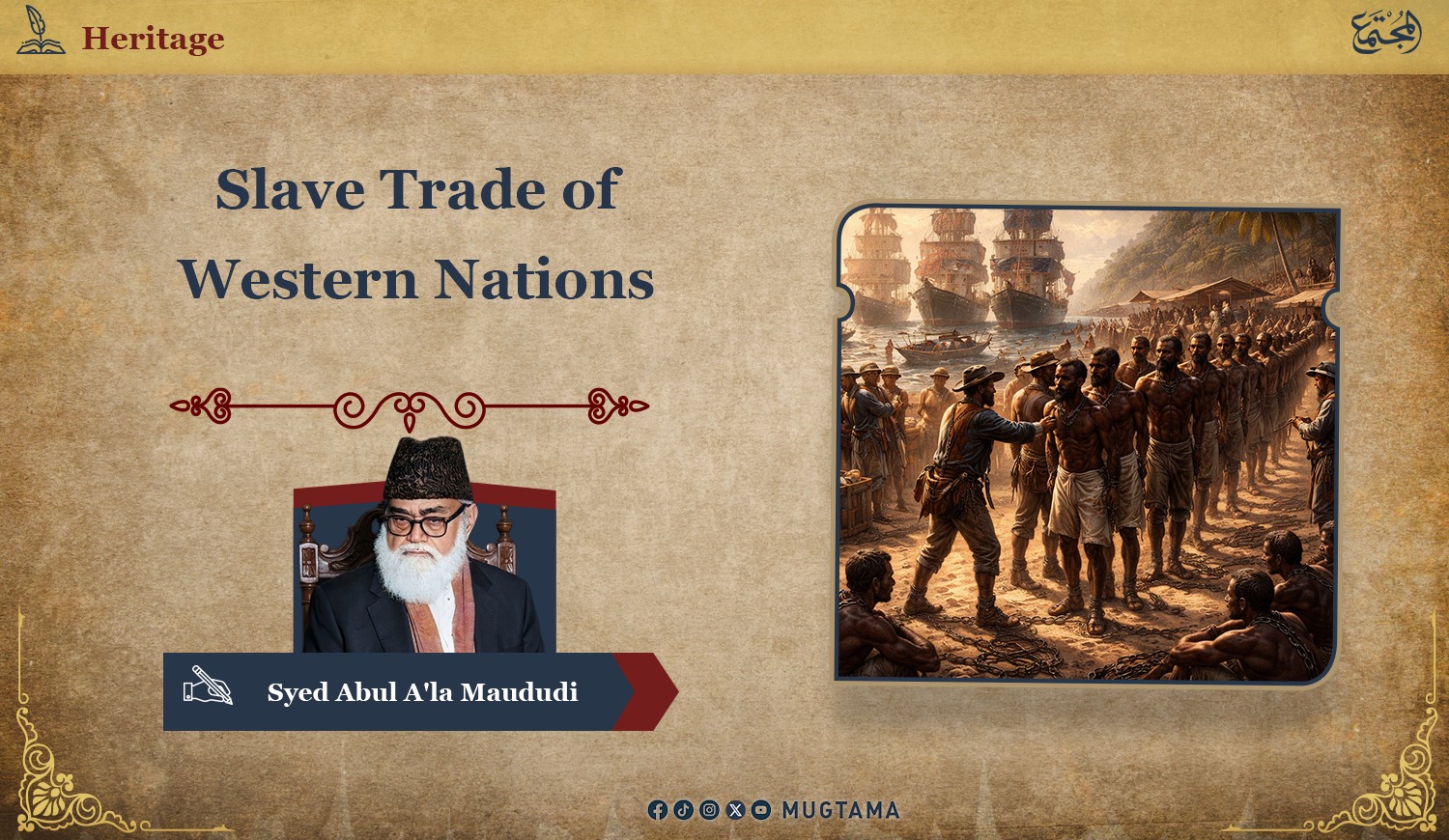
occupation of America and the West Indies, the slave trade continued for three
hundred and fifty years. The African coasts, from which captured Africans were
transported, became known as the “Slave Coast.” During just one century
(1680–1786), an estimated 20 million free individuals were captured and
enslaved for British colonies alone. In a single year (1790), 75,000 people
were taken and sent for forced labor.
The conditions
during transportation were inhumane. Slaves were crammed into small, filthy
ships, packed tightly like cattle. Many were chained to wooden shelves with
barely eighteen inches of space between them, leaving almost no room to move.
They were poorly fed, and the sick or injured received no medical care. Western
sources themselves acknowledge that at least 20% of enslaved individuals died
during the journey across the Atlantic. Overall, it is estimated that European
nations enslaved at least 100 million people during the height of the slave
trade.
Moral
Contradiction
This historical
record belongs to those who frequently criticize Muslims for acknowledging the
existence of slavery. The contrast is stark: while condemning others, these
societies were responsible for one of the largest and most brutal systems of
human exploitation in history. It reflects a situation in which the guilty
direct accusations toward others.
Islam’s
Approach to Slavery
Islam addressed
the issue of slavery by encouraging its gradual elimination. Various mechanisms
were introduced to promote the freeing of slaves. For example, freeing a slave
was prescribed as expiation for certain sins, and voluntary manumission was considered
a highly virtous act. It was taught that for every limb of a slave freed, a
corresponding limb of the one who freed them would be protected from the fire
of Hell.
As a result of
these teachings, large numbers of slaves were freed within a relatively short
time. The Prophet freed 63 slaves. Aishah freed 67, Abbas freed 70, Abd Allah
ibn `Umar freed 1,000, and Abd Ar-Rahman ibn `Awf freed 30,000. Many other
companions also liberated slaves in significant numbers. Within 30 to 40 years,
the longstanding system of slavery in Arabia was largely dismantled.
Prisoners
of War in Islamic Practice
After this
period, the only remaining form of captivity in Islamic society involved
prisoners of war. These individuals were handled through structured and
regulated means. They could be exchanged for Muslim prisoners or released upon
payment of ransom. If neither option was possible, they were distributed among
members of society, where they were to be treated with care and dignity.
This system
differed from other practices that involved mass detention, forced labor, or
exploitation. Instead of isolating prisoners in harsh conditions, they were
integrated into society under individual responsibility. As a result, many
embraced Islam, and their descendants went on to become scholars, jurists,
leaders, and even rulers.
Comparison
with Modern Warfare
In modern
times, prisoner exchange is considered a standard humanitarian practice.
However, this principle was implemented in Islamic societies from the earliest
period whenever the opposing side agreed.
In contrast,
modern warfare has often resulted in severe mistreatment of prisoners. For
example, after the Second World War, large
numbers of prisoners captured by the Soviet Union from German and Japanese
armies were subjected to extreme hardship. Many were forced into labor under
brutal conditions in remote regions such as Siberia, often in freezing
temperatures, with inadequate clothing and food.
These
conditions, in many cases, were harsher than those historically experienced by
slaves, raising serious questions about modern claims of humanitarian
superiority.
Read Also:
-
Has European Colonialism Had Morals?
-
“Slavery” Legacy of the Past and Dilemma of the Present
-------------------------------------------------------------
Resources:
-
Human
Rights in Islam by Syed Abul A'la Maududi
