









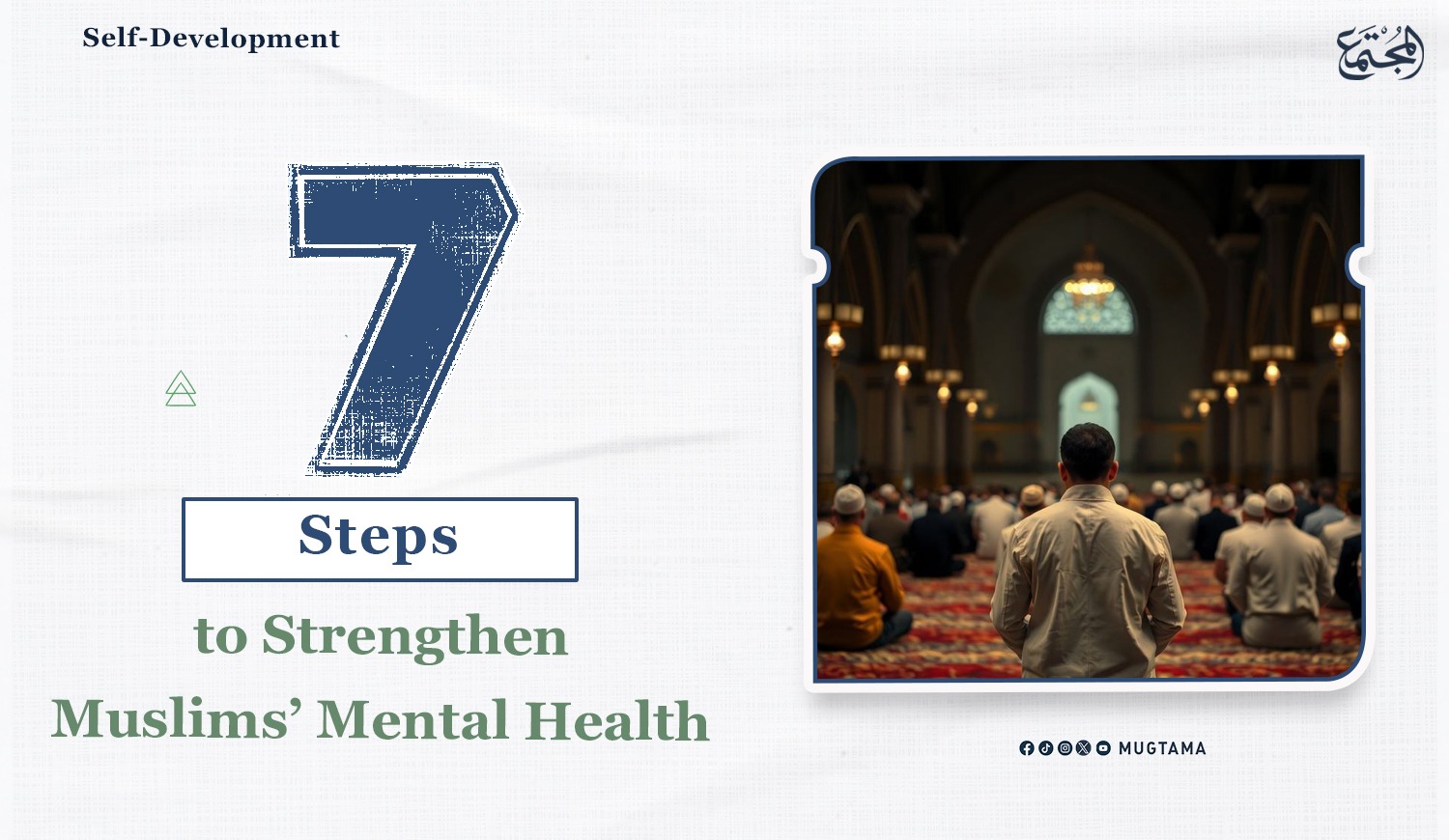
7 Steps to Strengthen Muslims’ Mental Health
Every year in October, the world celebrates
World Mental Health Day, with the aim of promoting prevention methods
and addressing mental and neurological disorders, recognizing mental health as
a universal human right.
Statistics indicate that about 154
million people worldwide suffer from depression, according to data from the
World Health Organization (WHO).
Recent estimates show that over one
billion people around the world suffer from mental and neurological
disorders, as well as conditions related to drug abuse.
The goal of World Mental Health Day
is to ensure the provision of mental health and psychosocial support services,
and to strengthen the resilience of individuals and communities affected by war
and displacement.
In some countries, this day — observed on
the 10th of October — is celebrated through a week or more dedicated to
raising awareness about a specific mental illness. However, wisdom calls for
promoting mental health throughout the year through preventive, physical, and
spiritual programs — as explained below:
1. Strengthening one’s spiritual state
This is achieved by deepening one’s connection with Allah Almighty through maintaining prayer, reciting the Quran, giving charity, remembrance (dhikr), and seeking
forgiveness. Elevating one’s level of faith and spirituality positively
reflects on both mental and physical health, in accordance with His saying: “Those who believe and whose hearts find comfort in the
remembrance of Allah. Surely in the remembrance of Allah do hearts find comfort.” (Ar-Ra`d 13:28) and His saying: “Surely those who say, ‘Our Lord is Allah,’ and then
remain steadfast, the angels descend upon them1 ˹saying,˺ ‘Do not fear, nor grieve. Rather, rejoice
in the good news of Paradise, which you have been promised.’” (Fussilat 41:30)
2. Following a balanced diet
Mental health can be enhanced through a well-rounded diet that includes fresh
fruits and vegetables while providing the body with essential vitamins and
minerals. Avoiding fast food and soft drinks supports the health of the brain
and nervous system.
3. Ensuring good sleep
Quality sleep is a key factor in maintaining mental health. It is not just
physical rest, but a vital process for renewing and repairing brain cells and
stimulating blood circulation. Those who lack adequate sleep often suffer from
insomnia, stress, and fatigue; thus, sufficient rest is necessary for both
physical and mental wellbeing.
4. Regular physical activity
Engaging in regular exercise — even for just 30 minutes a day — improves mood,
reduces stress and anxiety, eliminates toxins, and releases happiness hormones.
It also boosts blood circulation and strengthens the heart and blood vessels,
all of which contribute to a better psychological state.
5. Developing communication skills and
social connections
Building positive relationships and strengthening interaction with family,
friends, neighbors, and colleagues reduces feelings of loneliness and
depression. The Prophet (peace be upon him) said: “Who ever is
pleased that he be granted more wealth and that his lease of life be pro
longed, then he should keep good relations with his Kith and kin.” (Al-Bukhari)
6. Practicing hobbies and creative
activities
Engaging in hobbies such as swimming, archery, horseback riding, football,
painting, writing, gardening, or caring for pets — or simply spending time
outdoors and reflecting on nature — helps elevate one’s mood and promotes
mental recovery and vitality.
7. Avoiding negative influences
Refrain from drug use, smoking, alcohol, and reduce excessive use of social
media and smartphones. Immersing oneself in such activities can become
addictive, harming one’s physical, nervous, and mental health.
-------------------------------------------------------------
Read Also:
-
Mental Health and Soundness of the Mind