









Book Review: The Palestinian Diaspora in Latin America
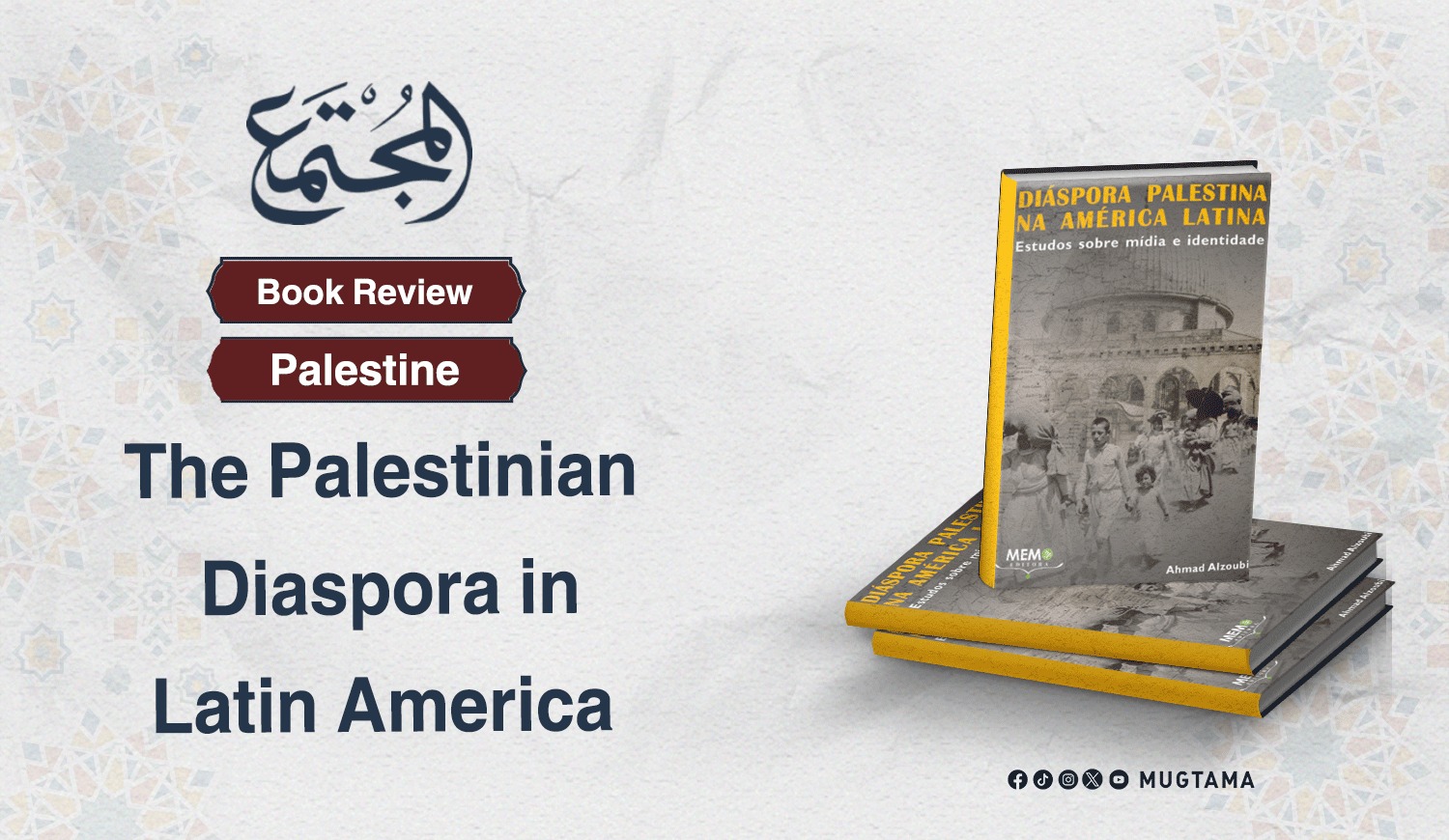
The book
'The Palestinian Diaspora in Latin America: Studies in Media and Identity'
highlights the conditions of Palestinians in Latin American countries, the
challenges of preserving identity, the level of Palestinian presence in Latin
American media, and the forms of interaction between the diaspora and
solidarity movements.
The book,
available in Portuguese and Spanish, covers the influence of media on the
Palestinian diaspora in five nations—Argentina, Brazil, Chile, El Salvador, and
Honduras—while highlighting their contributions to economy, politics, and
culture.
Belonging and Identity
The
author, Ahmed Al-Zoubi, Professor of Journalism and Digital Media at Lusail
University, offers an insightful reading of sensitive issues related to
belonging, memory, and struggle. He explores the unique specificities of each
diaspora community and their enduring ties to roots, language, and identity.
Furthermore, he challenges the conventional methods of traditional journalism
in handling conflicts, crises, and humanitarian emergencies, specifically
within the realm of war reporting and genocide.
The
book’s approach centers on analyzing the content of major newspapers across the
five countries. It serves as a comprehensive and meticulous investigation into
the Palestinian diaspora in various nations, examining how media outlets shape
the community's perceptions and their ongoing struggle for identity and
resistance.
These
nations represent the most prominent centers of the Palestinian diaspora in
South America, both in terms of population size and socio-political influence.
According to the author, the Palestinian presence in this region dates back to
the pre-Nakba era.
Through
an in-depth study derived from his doctoral thesis at the Graduate Program in
Social Communication at the Methodist University of São Paulo, Al-Zoubi
explores the role of major newspapers in shaping local public opinion. He
examines how these outlets undermine the Palestinian diaspora's struggle for
cultural recognition and its preservation.
Strategies of Resistance
Al-Zoubi
highlights the cultural and political resistance strategies developed by
Palestinians in the diaspora within a media environment shaped by local and
international influences. He states: 'The work underpinning this book was
conducted during one of the most tragic periods for the Palestinian people,
marked by the escalation of "Israeli" massacres against them.
The
author states that he maintained scientific rigor throughout the book, while
also adhering to humanitarian principles and supporting them with evidence.
This approach aligns with the standards of social impact research that
addresses the history of human and civil rights violations.
The book
focuses on humanitarian and peace journalism, journalism theories, the history
of Palestinian migration, diaspora studies, and cultural identity. It further
analyzes how Latin American media portrays the Palestinian cause.
The
author notes that Palestinian identity remains vibrant across these five
nations, manifested through the Dabke, falafel, and hummus, as well as the
Palestinian Keffiyeh, which many are keen to wear during solidarity events. He
points out that Palestinian communities in Latin America have successfully
preserved their national, religious, and cultural belonging.
This
valuable and comprehensive volume features interviews with 40 prominent figures
regarding the cultural and political resistance strategies adopted by the
diaspora. It provides a detailed account of the media and political landscape,
contributing to a broader understanding of the Palestinian cause and its media
representation. Furthermore, it proposes alternative frameworks for
conceptualizing the role of media within conflicts of identity and belonging.
You may
also like:
Book Review: “Nakba and the Emergence of the Palestinian Diaspora in Kuwait” by Dr.Shafiq Al-Ghabra
10 books on the Palestinian Literature: Echoes of Resilience
Book review: Strategies for the Judaization of Jerusalem and Al-Aqsa