




Gargee’an… and 10 Cultural and Social Landmarks
The
blessed month of Ramadan is a season in which the civilizational
distinctiveness of Arab and Islamic peoples shines through, as religious
rituals intertwine with social customs in a creative cultural expression
preserved by collective memory and passed down through generations without
interruption.
Among the
most enduring Ramadan
traditions in the Gulf states—particularly in Kuwait—is the celebration of
“Gargee’an,” a living example of the interaction between faith, history, and
identity.
1.
What is Gargee’an?
Heritage
studies indicate that Gargee’an is an integral part of the Gulf’s popular
traditions, closely tied to the middle of the blessed month of Ramadan. It
strengthens social bonds and spreads an atmosphere of joy, especially among
children.
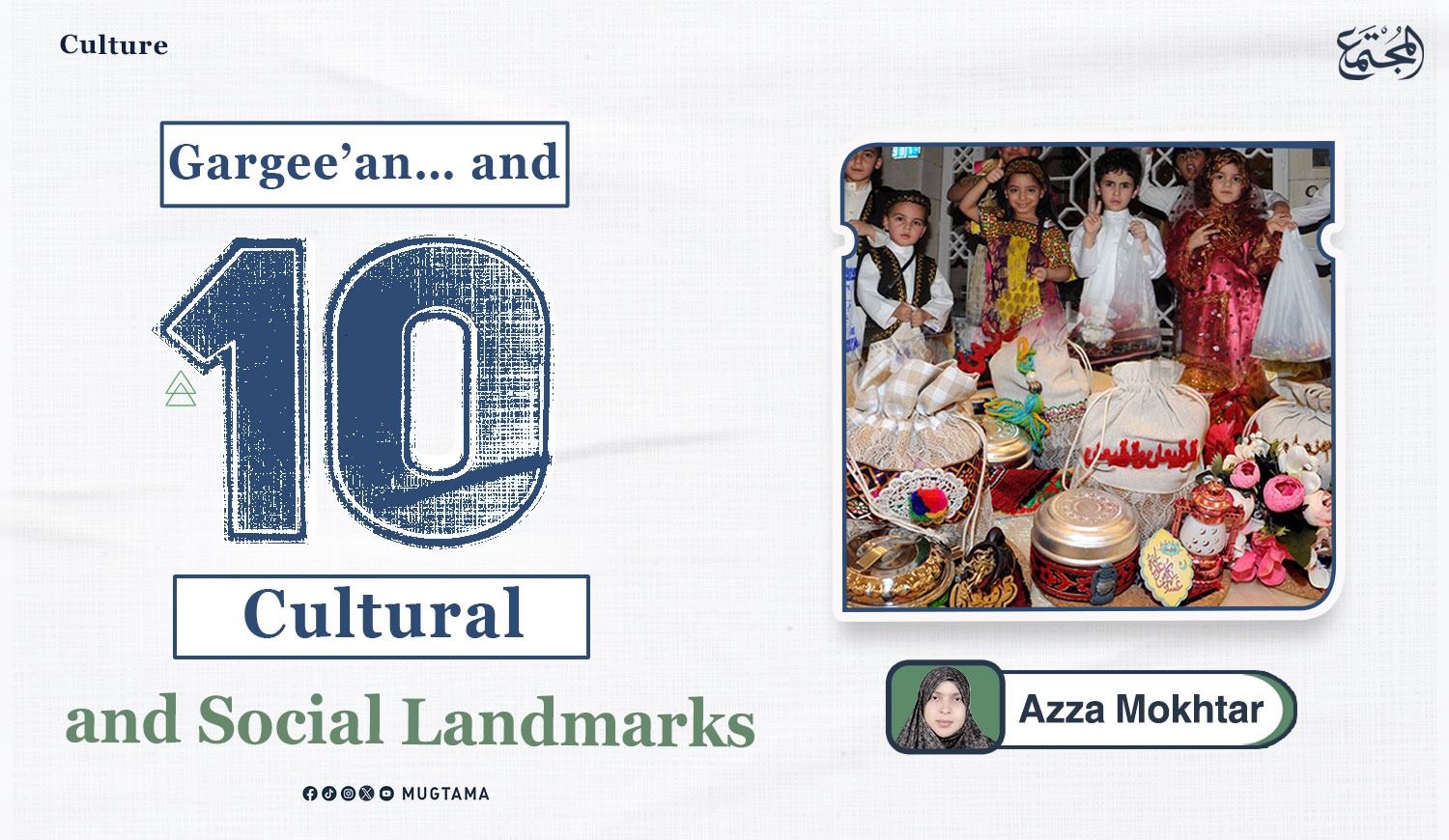
On this
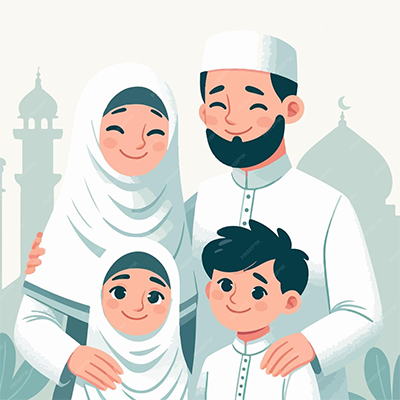
occasion, children wear traditional costumes that reflect the authenticity of
the Arab environment. Carrying cloth or plastic bags, they roam their
neighborhoods chanting folk songs, receiving sweets and nuts in return. Thus,
the streets transform into a vibrant festive space, embodying the spirit of
sharing and collective joy.
2.
Controversies Surrounding Gargee’an
Some
legal questions have been raised regarding the permissibility of celebrating
Gargee’an. However, the majority of scholars have allowed it, considering it a
social custom rather than an act of worship.
Jurist
Dr. Khalid Al-Madhkour explains: “Gargee’an is a tradition and a custom, not a
form of worship. Customs in Islamic law remain valid in each society unless
they contradict a text from the Qur’an or the Sunnah of the Prophet (peace be
upon him). This practice is permissible, provided that extravagance is avoided,
children are safeguarded when they go out, and their time is regulated.” He
adds that during Ramadan, there are various social customs that differ from one
country to another, such as visits, exchanging greetings, certain foods and
drinks, the firing of the iftar cannon, and children’s clothing. “These customs
are acceptable in Islamic law, as they bring joy to children’s hearts and do
not conflict with religious principles.
Accordingly,
Gargee’an falls within the category of permissible social customs, provided
that moderation is observed and extravagance avoided.
3.
Gargee’an… and the Educational Dimension
Historically,
the timing of the celebration has been linked to encouraging children to fast
during the first half of Ramadan and motivating them to complete it, which
grants Gargee’an a clear educational dimension.
From the
perspective of educational sociology, Gargee’an fulfills multiple functions,
including:
- Gradually
and safely integrating the child into society.
- Developing
courage, initiative, and a spirit of participation.
- Teaching
children to thank and show kindness to elders when receiving gifts.
- Strengthening
their emotional connection to the blessed month of Ramadan.
Thus,
Gargee’an occupies a deep emotional place, tied to childhood memories and
festive joys in Gulf societies.
4.
Gargee’an: An Ethical Perspective
Despite
the simplicity of distributing sweets, the practice carries profound cultural
meanings, foremost among them the values of generosity and sharing. The visitor
at the door is not a single child, but groups of children—reflecting the spirit
of community and solidarity.
The
occasion also embodies the principle of giving according to one’s means,
without regard to material differences between households. It is a broad social
participation that preserves collective memory, even if it entails certain
financial costs.
5.
The Aesthetics of Sound and Chants
The
chants accompanying Gargee’an are among the most prominent features of popular
Ramadan folklore. They represent collective singing with words orally
transmitted across generations, without formal documentation. One of the most
famous chants goes:
"Gargee’an,
Gargee’an, between Qusayr (1) and Ramadan,
Give us
and may God give you,
May He
guide you to the House of Mecca,
And bring
you back to your loved ones.
The words
of the chants vary from one Gulf country to another, yet this tradition is
distinguished by the fact that the child does not ask for sweets with an
outstretched hand, but rather through spontaneous collective singing. This
transforms the occasion into a cultural school of sound, reflecting the
authenticity of Gulf heritage despite the rapid manifestations of modernity.
6.
Gargee’an Attire and the Preservation of Heritage
Children
wear traditional garments, sometimes crafted especially for this occasion: boys
don the “dishdasha,” while girls wear the “daraa.” The scene resembles a living
heritage display, evoking the country’s history and traditions.
This
attire serves as a bridge between past and present, preserving the presence of
Gulf identity in the consciousness of new generations. Through Gargee’an,
traditional clothing is safeguarded from fading away, becoming a practical
means of cultural preservation.
7.
Gargee’an… Strengthening Social Bonds
Gargee’an
is distinguished as a profoundly spatial event, practiced in the streets and in
front of neighbors’ houses rather than solely inside homes. Neighborhoods thus
become open social stages, reflecting relationships built on affection and good
neighborliness in Gulf societies.
This
practice signifies a strong network of social ties that allows children to roam
safely, contributing to their early integration into the social fabric and
reinforcing their sense of belonging.
8.
Gargee’an… Building a Unified Gulf Identity
Although
it is closely associated with Kuwait, Gargee’an is a widespread Gulf
phenomenon, albeit with different names such as “Garangao” and “Garqa‘oon.” It
is one of the shared traditions among Gulf states, making it an important
source in building a common regional cultural identity and reinforcing the
value of belonging to the Arab Gulf community.
9.
Gargee’an and Contemporary Transformations
The
celebration has not been spared the influence of contemporary transformations
and consumer culture. What once revolved around the simple distribution of
sweets has expanded to include elaborate decorations and increased spending,
with some gifts turning into costly commercial products.
In some
cases, car parades have replaced children’s processions through alleyways, and
traditional chants have given way to the blaring of horns. This shift is not
limited to Kuwait but is tied to broader cultural changes under modern
consumerist trends, where shops compete to present a “modern Gargee’an”
packaged with the finest materials and adorned with luxury chocolates. (2)
10.
Gargee’an… Why Does Society Need It
Societies
need a unifying culture that safeguards their identity and cohesion, as well as
distinctive festive rituals that strengthen the spirit of belonging. Gargee’an
fulfills this role remarkably: it transforms fasting into joy, the neighborhood
into a supportive community, and the child into a conscious bearer of heritage.
In an age
marked by growing signs of social fragmentation, the importance of such
traditions becomes evident. They connect generations to their past and protect
their identity from dissolving into other cultures.
You may
also like:
5 Islamic Traditions Distinguish Ramadan in Kuwait
7 Regulations for Iftar Banquets in Kuwait’s Mosques
Notes:
1.
Qusayr: is not
the name of a month, but rather the name of an old neighborhood in Kuwait. The
chant preserved this local reference, which children used to sing while roaming
the streets during the celebration.
2.
Reported
by Kuwait News Agency, 31 May 2018