





How Parents Can Create Stability During War
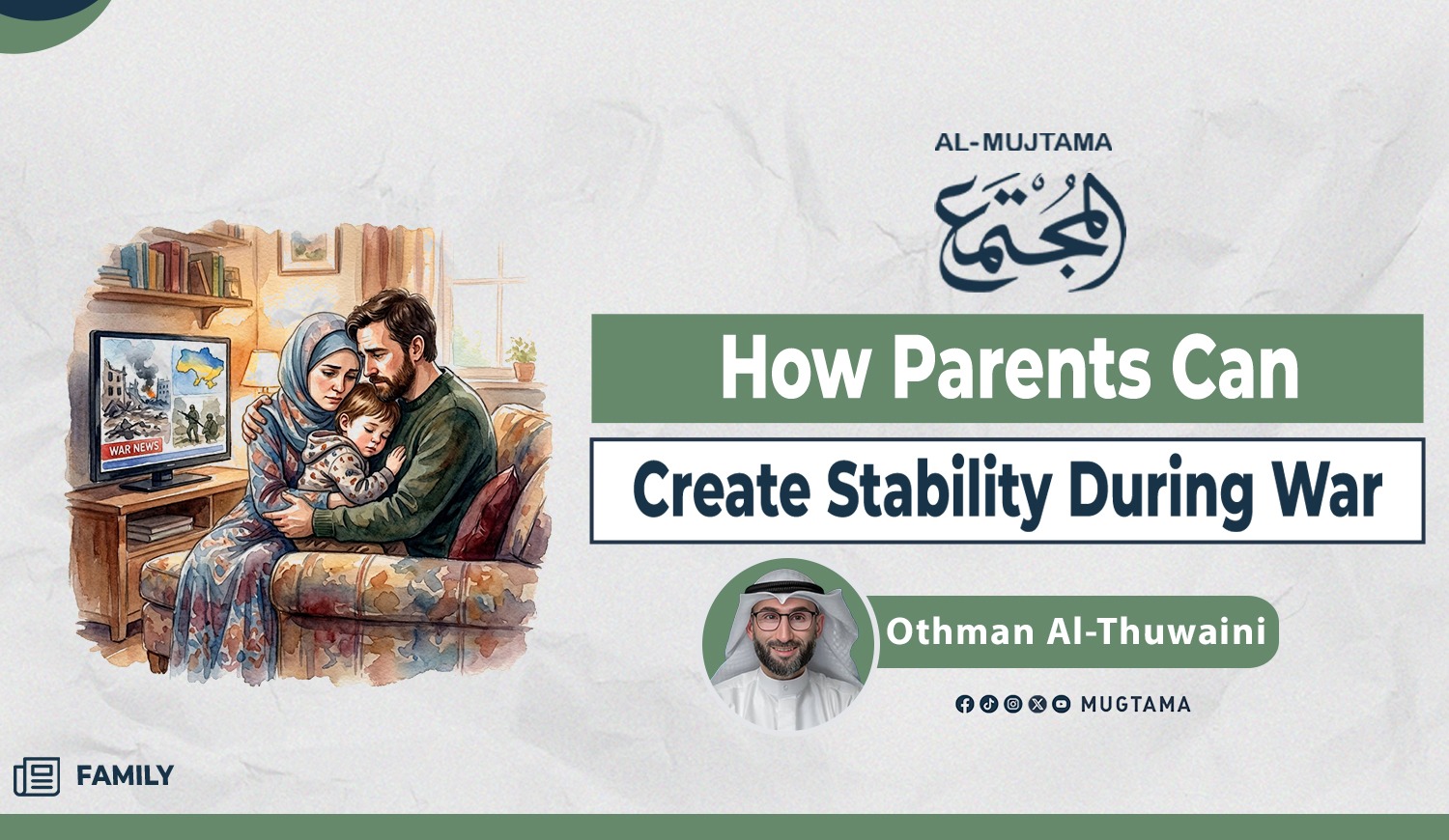
In times
of crisis—when the sounds of missiles intertwine with heart aches, and sirens
rise disturbing calmness—the home is no longer merely walls that provide
shelter. Rather, it transforms into a psychological, spiritual, and social
fortress, within which children’s awareness is shaped, and where the contours
of their stability or instability are defined.
In light
of this brutal Iranian aggression, the responsibility of both father and mother grows immensely—not only in providing physical
protection, but in creating an internally stable environment that instills a
sense of tranquility that rises above the noise outside. Here, parents are not
merely conveyors of news; they are creators of the emotional state. They are
not just observers of events, but guides who shape their meanings within their
children’s hearts.
Strengthening Faith as the Foundation of
Inner Peace
The first
thing a home needs in such circumstances is spiritual reassurance, which is the
foundation upon which all other forms of calm are built. When children see
their parents remaining steadfast in the remembrance of Allah, maintaining
prayer, and internalizing the meanings of divine decree, they learn that what
is happening is not chaos, but a written destiny—and that the believer is not surprised by trials, but prepares for them.
This can
be translated into practical action by turning moments of fear into collective
remembrance, where hands are raised in supplication: “O Allah, protect our
country and our people.” Events can also be connected to Quranic stories that
reinforce steadfastness, such as the story of Musa (peace be upon him) when he
said: {Absolutely not! My Lord is certainly with
me—He will guide me.} [Al-Shu`ara’ 62:26]
This
connection creates a faith-based awareness that interprets events and grants
the soul a tranquility that transcends the apparent scene.
Managing Emotions to Create
Psychological Safety for Children
Psychological
reassurance lies in the ability of parents to manage their own emotions before
attempting to manage their children’s. A child does not fear the event itself
as much as they fear their parents’ reactions. If they see composure, they feel
safe; if they see panic, their fear multiplies.
Practical
applications include: controlling tone of voice, avoiding intense discussions
in front of children, limiting excessive exposure to news, and replacing it
with calming home activities such as group games or quiet conversations.
It is
also important to allow the child to express fear without either exaggeration
or dismissal, but rather with containment and reassurance: “Yes, there is something concerning, but we are
together, the country is protecting us, and Allah is watching over us.”
Strengthening Family and Social Bonds
During Crisis
Social
reassurance emphasizes that the home is not an isolated island, but part of a
cohesive social fabric. Strengthening family bonds, maintaining communication
with relatives, checking on neighbors, and offering support are all indirect
messages to children that society stands united.
This can
be turned into practical action by involving children in simple initiatives:
preparing meals to send to neighbors, writing supportive messages to relatives,
or even making collective du`a’ for the people of the country. This fosters a
sense of belonging and transforms individual anxiety into positive collective
energy.
Teaching Values Through Crisis:
Patience, Trust, and Responsibility
Value-based
reassurance emerges when a crisis becomes a practical lesson in ethics. Instead
of war being merely frightening news, it becomes a field for nurturing meanings
such as patience, courage, reliance on Allah, controlling rumors, and avoiding
unverified information.
Here, a
father can explain to his children the dangers of spreading rumors
and that words carry responsibility in times of crisis. Steadfastness does not
mean the absence of fear, but knowing how to deal with it properly.
A mother,
in turn, can reinforce values of mercy, empathy, and gratitude for the
blessings of Allah in both ease and hardship, instilling in her children a
sense of supplication and positive action.
Teaching Life Skills for Safety and
Awareness
Crises
open the door to teaching life skills that are not easily learned in normal
times, such as: what to do when sirens are heard, where to go, how to calm
oneself, and how to help others.
These
skills can be turned into practical exercises at home in a calm,
non-frightening way, so children feel prepared—not like victims. They can also
be trained in critical thinking skills when dealing with news, learning to
distinguish between accurate and misleading information—one of the most
essential skills in an age of information chaos.
Maintaining Learning and Routine for
Stability
Academic
reassurance is equally important. Continuing education during crises sends a
message of stability. A home that maintains a learning routine—even a simple
one—communicates to children that life continues, and that complete halt is not
an option.
This can
be achieved by allocating daily time for studying, reading, or self-learning,
with flexibility that considers the psychological state, without pressure or
harshness. The goal here is not academic achievement
as much as preserving the rhythm of life.
Ultimately,
a stable home is not
one that is free of fear, but one that knows how to manage fear. It is a home
where its members see danger—but also see the care of Allah alongside it. They
hear disturbing sounds—but above them, they hear the voice of faith. They live
through the event—but do not surrender their hearts to it.
When
parents succeed in this, they are not merely protecting their children from a
passing moment; they are shaping within them a human being who is steadfast,
aware, balanced—and capable, one day, of becoming a source of reassurance for
others.
For Further Reading:
- Safeguarding Muslim’s Household Against Harm, Immorality, and Deviation
- Aggression Against Concepts!
- 8 Parenting Methods to Boost Your Child’s Mental Health
-------------------------------------------------------------