





I'tikaf: A Catalyst for Change and Renewal

The last ten nights of Ramadan have begun, bringing with them
the practice of I`tikaf,
a Sunnah of the Prophet (peace be upon him), which he consistently observed
during these nights. The Prophet (peace be upon him) once missed I`tikaf in the
last ten nights but made up for it in Shawwal, observing it during the first
ten days. In the year of his passing, he performed I`tikaf for twenty days.
As the last ten nights of Ramadan starts, the relentless
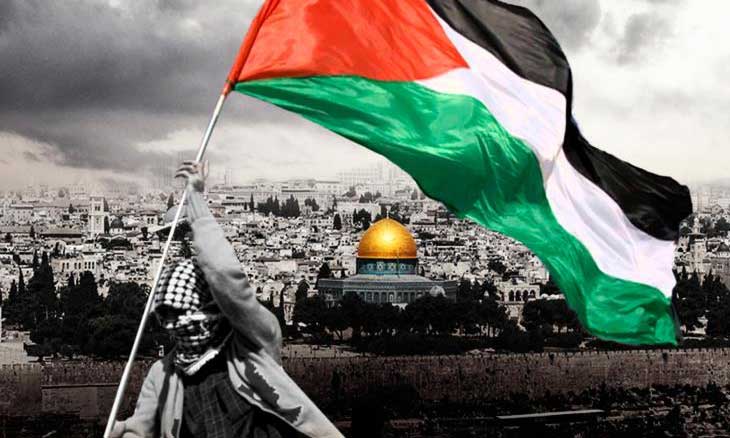
bombing, killing, aggression, and genocide against our brethren in Gaza
persist, with no regard for the sanctity of the holy month or the humanitarian
conditions of men, women, and children. The ongoing atrocities in Gaza during
these blessed nights raise an important question: Which is more important for a
Muslim during the last ten nights of Ramadan devoting oneself to I`tikaf,
seclusion, spiritual purification, and nurturing the heart, or engaging in
action, striving for reform, enjoining good, forbidding evil, and supporting
the oppressed?
This question has been a subject of debate among scholars,
both past and present. There have been two primary schools of thought regarding
this issue, one that favors isolation and seclusion and another that advocates
for movement, activism, and calling to Allah.
The Two Schools of Thought
The first school, supporting isolation, cites authentic texts,
including the hadith of Uqbah ibn ‘Amir: “I said: 'O Messenger of
Allah! What is the means to salvation?' He said: 'That you control your tongue,
suffice yourself your house, and cry over your sins.'” (At-Tirmidhi)
The second school relies on the examples of the prophets, who
spent their lives actively calling people to Allah, as well as the saying of
the Prophet (peace be upon him): “A believer who mixes with people and endures their annoyance is
better than the one who does not mix with them and does not endure their
annoyance.” (Ibn Majah and Ahmad)
A Balanced Approach
The view we favor—especially in our time and in the West—is a
balanced approach between these two positions. While seclusion has its merits,
precedence should be given to action, serving the cause of Allah, building
societies based on divine guidance, and striving for excellence in various
fields. Supporting the oppressed, particularly in Gaza today, should be among
the top priorities.
However, every Muslim must also have times of seclusion,
moments when they withdraw from people to connect with Allah, purify their
hearts, and reflect on their spiritual state. This spiritual retreat serves as
fuel for greater action and perseverance in the path of Allah.
Maximizing the Last Ten Nights
The last ten nights of Ramadan are a prime opportunity for spiritual renewal. Every
Muslim, especially in Europe, should not let these blessed nights pass without
engaging in sincere devotion. We live in an era dominated by materialism over
spirituality, where the soul is parched, and hearts have hardened. Just as the
body requires a physical detox to maintain health, the heart and soul require a
spiritual detox, which can only be achieved through I`tikaf, seclusion with
Allah, and deep reflection.
As Ibn `Ata’ Allah As-Sakandari said: “Nothing benefits the
heart as much as a seclusion that allows one to enter the realm of
contemplation.” For, the seclusion alone is not enough, it must be
accompanied by meaningful reflection that enhances one’s relationship with
Allah.
For those unable to observe full I`tikaf for all ten nights,
they may do so for a few days, nights, or even hours. Even setting aside time
at home for solitude, prayer, and reflection, though it does not count as I`tikaf
in its technical sense, but it can still be spiritually beneficial. True I`tikaf
and seclusion require a complete detachment from worldly distractions. There is
no genuine I`tikaf with phones and social media. The essence of I`tikaf is to
withdraw from the world’s noise and engage in remembrance, Quran, supplication,
and contemplation.
Role of Seclusion in Strengthening Faith
1. Seclusion with Allah Leads to Divine Blessings
Withdrawing from worldly distractions and dedicating oneself
to prayer, supplication, and humility before Allah brings about immense divine
rewards. Allah says, “So after he had left
them and what they worshipped besides Allah, We granted him Isaac and Jacob,
and made each of them a prophet.” (Maryam 19:49) Blessings
came after seclusion, “Whenever Zachariah
visited her in the sanctuary, he found her supplied with provisions. He
exclaimed, ‘O Mary! Where did this come from?’ She replied, ‘It is from Allah.’”
(Ali `Imran 3:37) “Then and there
Zachariah prayed to his Lord, saying, ‘My Lord! Grant me—by your
grace—righteous offspring. You are certainly the Hearer of ˹all˺ prayers.’ So the angels called out
to him while he stood praying in the sanctuary, ‘Allah gives you good news of ˹the birth of˺ John.’” (Ali `Imran
3:38-39) Blessings and sustenance came after seclusion and humility
before Allah.
The Prophet (peace be upon him) spent time in seclusion in the
cave of Hira before he received the first revelation. This period of isolation
prepared him for the immense responsibility of delivering the message of Islam.
Similarly, our moments of seclusion and tears in the last ten nights of Ramadan
may be a means for relief and victory for our brethren in Gaza.
2. Balancing Between Seclusion and Action
The Prophet (peace be upon him) emphasized a balance between
spiritual retreat and active movement. Abu Sa`id Al-Khudri reported that
somebody asked, “O Allah's Messenger ((peace be upon him))! Who is the best among
the people?” Allah's Messenger (peace be upon him) replied “A believer who
strives his utmost in Allah's Cause with his life and property.” They
asked, “Who is next?” He replied, “A believer who stays in
one of the mountain paths worshipping Allah and leaving the people secure from
his mischief.” (Al-Bukhari)
The Prophet (peace be upon him) gave preference to the active
believer who strives in the path of Allah, but still acknowledged the merit of
seclusion, showing that both aspects have their importance.
The fundamental principle is that we should draw spiritual
sustenance from moments of i'tikaf (spiritual retreat) and solitude to support
our pursuit of da'wah within society, rather than isolating ourselves solely
for worship. Otherwise, we would fall into a blameworthy practice, resembling
the monasticism that was introduced by previous nations. Allah says, “As
for monasticism, they made it up—We never ordained it for them.” (Al-Hadid
57:27)
3. The Companions and Scholars Opposed Total Isolation
`Abdullah ibn Mas`ud once corrected a group of people who left
society to devote themselves entirely to worship, leaving Kufa. Upon hearing
about them, he went to visit them. They were delighted by his presence, but he
asked: “What made you do this?” They replied: “We wished to separate from the
people and dedicate ourselves to worship.” Ibn Mas`ud responded: “If everyone
did as you did, who would fight the enemy? I will not leave until you return
back.”
How beautiful are his words: “If everyone did as you did, who
would fight the enemy?” Fighting the enemy is not limited to the battlefield
alone; rather, it extends to all fields of movement and striving for the
religion of Allah, whether in the realm of thought, politics, knowledge,
education, and beyond. If we intensify our efforts in the last ten nights of
Ramadan in search of Laylat Al-Qadr, the Prophet (peace be upon him) has guided
us to something even greater, saying: “To stand watch for one
hour in the way of God is better than standing in prayer near the Black Stone
on Laylat Al-Qadr.” (Ibn Majah and Al-Bayhaqi)
And today, the best field of action is supporting and aiding
the oppressed in Gaza.
4. Movement for the Religion and Helping the Oppressed as a Fruit
of I'tikaf and Solitude
There is a remarkable connection in several authentic
prophetic narrations between tears shed out of fear of Allah in moments of
solitude and the act of guarding and striving in the cause of Allah. This
signifies that i'tikaf, intimate supplications, and tears shed in seclusion
should lead to steadfastness, movement, and action, not withdrawal and
remaining solely within the sphere of worship.
The Prophet (peace be upon him) said: “There is nothing
more beloved to Allah than two drops and two traces: A teardrop shed out of
fear of Allah, and a drop of blood shed in Allah's cause. As for the two
traces: A trace resulting in Allah's cause, and and a trace resulting from one
of the duties that Allah made obligatory.” (At-Tirmidhi)
He (peace be upon him) also said: “One who weeps out
of fear of Allah, will not enter the Hell till milk returns back in the udder;
and the dust raised on account of fighting in the path of Allah and the smoke
of Hell will never exist together.” (At-Tirmidhi)
And he (peace be upon him) said: “There are two eyes
which will never be touched by hell, an eye which weeps from fear of God and an
eye which spends the night on guard in God’s path.” (At-Tirmidhi)
Read Also:
-
Laylat Al-Qadr... The Greatest Night in Islam
-
10 Divine Virtues of Ramadan
-------------------------------------------------------------