





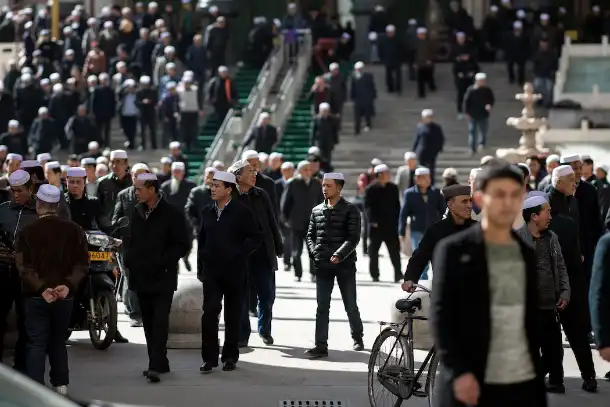



Millions at Stake
India: Bihar's Voter Roll Controversy… A Deep Dive

In a controversial move, the Election Commission of India (ECI) has initiated an intensive and special review process of voter lists exclusively in the state of Bihar. This is an unprecedented situation where an electoral exercise of this magnitude is being implemented in a single state without extending it to others. This decision has sparked a wave of criticism and concern, particularly from researchers and activists who believe that this measure, although undertaken under administrative guise, carries deep political and social implications.
Context of the Decision
According to the Election Commission's statement issued on June
28, 2025, Bihar's electoral roll stands at 7.9 million, with 94.96% already
registered. Nevertheless, the commission decided to conduct a review aimed at
updating records and ensuring voter eligibility. However, the practical
interpretation of this decision means that approximately 4.76 million people
will have to prove their citizenship within a very short deadline, not
exceeding one month.
It is worth noting that a similar exercise has not been
implemented since 2003, when citizens were only required to submit minimal
documents to prove eligibility.
Required Documents: Obstacle or
Organization?
One of the most contentious points is the complex conditions
for proving citizenship. Individuals whose names were not on the 2003 lists
will be required to submit:
1. A
birth certificate was issued after July 1, 1987.
2. A
second document containing the father's or mother's name, such as a school card
or government records.
It should be noted that most citizens from impoverished
classes, including women, villagers, and the elderly, do not possess birth
certificates, let alone documents bearing their parents' names. In a state like
Bihar, where only 2.8% of the population holds a birth certificate, the task
will be nearly impossible for many. This practically means that millions may be
deprived of their right to vote without any fair appeals process.
Potential Administrative and
Political Discrimination
Why Bihar only? Why now? Why are documents like Aadhaar
rejected despite being used in all government transactions?
The answers may not be legal, but political. Bihar is an electorally
strategic state, and its disadvantaged classes, who might tend to vote
against the ruling party, are seen as a politically uncertain element.
Therefore, this exercise could be interpreted as a systematic attempt to reduce
the number of voters from these categories.
A growing number of political analysts believe that this step
is not just an administrative exercise but constitutes a de facto prelude to
the implementation of the National Register of Citizens (NRC) project
and the amended Citizenship Amendment Act (CAA), both of which have
caused widespread controversy in recent years. These analysts argue that
imposing citizenship verification through complex and specific documents
represents the first stage in building a database that will later be used to
exclude those who do not meet citizenship criteria according to future
standards.
Who Will Be Affected?
The categories most affected by this decision are:
- Disadvantaged
social classes.
- The
poor and rural populations.
- Women
and the elderly who lack official documents.
- Migrants
and seasonal workers who do not have permanent residency records.
Adding to this, if the verification campaign starts on July 25
and is to be completed within a month, it appears to be an organized attempt to
strike large numbers of voters from marginalized classes.
Human rights and academic organizations have described this
measure as an electoral cleansing process under a regulatory guise. Some
analyses have gone further, stating that the campaign paves the way for
reducing the number of Muslim voters and lower classes in a state historically
characterized by an unstable and unpredictable political weight.
Many civil society activists have expressed their fear that
verification will turn into a tool for creating an unofficial citizen registry,
similar to the controversial NRC project implemented in Assam.
Are We Facing a Constitutional
Crisis?
In a democratic country like India, the right to vote is
considered a fundamental constitutional right. While the goal of updating
electoral rolls is to ensure transparency and integrity, the means employed
should be fair, inclusive, and non-discriminatory.
The selective implementation of this administrative exercise
in a single state, with unrealistic conditions, and within a tight timeframe,
can only be interpreted as a systematic attempt to exclude a segment of
vulnerable citizens. Furthermore, the refusal to accept documents like Aadhaar
or work identification as proof of citizenship reveals intentions that go
beyond administrative regulation to political manipulation.
Preserving the essence of democracy requires not only free and
fair elections but also ensuring that no citizen is deprived of their vote due
to their poverty, social origin, or ignorance of bureaucracy.
In conclusion, what is happening in Bihar cannot be considered
merely an administrative measure to improve the accuracy of voter lists.
Instead, it is a disturbing development that poses a real threat to the
principle of universal suffrage upon which Indian democracy is built. The
conditions imposed in this campaign do not align with the social and economic
reality of most of the state's population. Instead, they seem to indirectly
target the most marginalized groups; from the poor and women to the elderly and
lower classes, who do not possess the required documents despite their
participation in previous elections.
Despite the Election Commission's insistence that the campaign
is neutral and regulatory, its limited implementation to a single state, its
timing during a sensitive political period, and the requirement of
difficult-to-obtain documents raise deep suspicions about its true objectives.
This concern is heightened by the affirmation of several political analysts
that this step represents a practical prelude to the implementation of the National
Register of Citizens (NRC) project and the amended Citizenship Amendment
Act (CAA), signaling a dangerous shift in the understanding of citizenship
from a guaranteed constitutional right to a selective criterion that could be
used as a tool for political and social exclusion.
To preserve the integrity of the electoral process and ensure
citizens' trust in it, this review must be immediately halted, and the
approach to managing voter lists reconsidered to uphold the principles of
inclusivity, justice, and transparency. Democracy is not rooted in exclusion
and suspicion; rather, it is built through trust, free participation, and equal
recognition of everyone's rights, without discrimination or impossible
conditions.